
Introduction
The story of Rumpelstiltskin has fascinated readers for generations with its blend of magic, mystery, and moral lessons. At first glance, it seems like a simple fairy tale about a strange little man who spins straw into gold. However, beneath its surface lies a deeper narrative about greed, power, promises, and consequences.
In this article, we’ll explore the origins of Rumpelstiltskin, break down its meaning, examine its characters, and uncover why this classic tale still resonates today.
The Origins of Rumpelstiltskin
The tale of Rumpelstiltskin comes from European folklore and was popularized by the Brothers Grimm in the 19th century. Like many fairy tales, it evolved over time, with different cultures adding their own twists.
Key Historical Facts
- First recorded in the early 1800s
- Originates from German folklore
- Part of Grimm’s Fairy Tales collection
- Originally darker and more intense than modern versions
Core Elements of the Story
- A miller lies about his daughter’s ability
- The girl is forced to spin straw into gold
- A mysterious creature helps her—for a price
- A dangerous bargain leads to a final test
What Is Rumpelstiltskin About?
At its core, Rumpelstiltskin is about deals and consequences. A desperate girl accepts help from a magical being, only to realize that nothing comes for free.
Simple Summary
Rumpelstiltskin is a fairy tale about a young woman who must spin straw into gold. A magical creature helps her in exchange for future promises, including her firstborn child. She ultimately saves herself by discovering the creature’s name.
Understanding Wasatha: The Principle of Balance in Life, Faith, and Society
Characters and Their Symbolism
The Miller’s Daughter
She represents innocence and desperation. Forced into impossible situations, she makes risky decisions just to survive.
The King
A symbol of greed and power, the king values wealth over humanity.
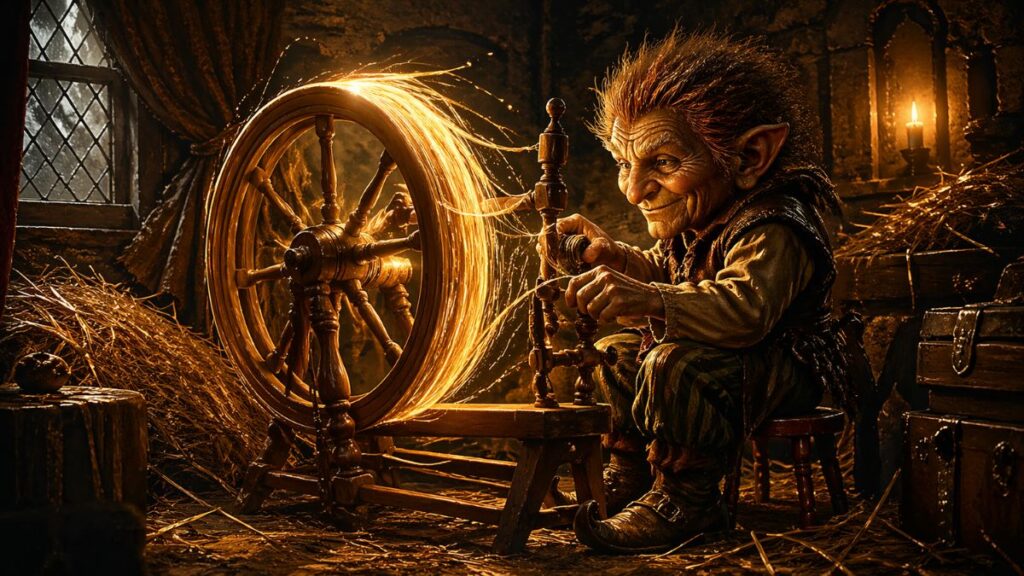
Rumpelstiltskin
He embodies cunning, mystery, and the hidden cost of shortcuts.
Character Symbolism Table
| Character | Represents | Key Traits | Lesson |
|---|---|---|---|
| Miller’s Daughter | Innocence & survival | Fearful, resourceful | Think before making deals |
| King | Greed & authority | Demanding, selfish | Power can blind judgment |
| Rumpelstiltskin | Trickery & consequence | Clever, manipulative | Nothing comes without cost |
The Deeper Meaning Behind Rumpelstiltskin
The Danger of Greed
The king’s obsession with gold drives the entire conflict. Without his greed, the story wouldn’t exist.
The Cost of Shortcuts
Rumpelstiltskin offers an easy solution—but at a heavy price. This reflects real-life situations where quick wins lead to long-term problems.
The Power of Knowledge
Knowing Rumpelstiltskin’s name ultimately breaks his power. This highlights how knowledge can overcome even magical threats.
Themes Explained
1. Deals and Consequences
Every agreement in the story has a price. The girl trades personal items first, then risks something far more valuable.
2. Identity and Power
Rumpelstiltskin’s name holds power over him. This theme appears in many mythologies.
3. Fear and Survival
The girl’s decisions are driven by fear. Her actions reflect how people behave under pressure.
Key Lessons from Rumpelstiltskin
Practical Life Lessons
- Don’t make promises you can’t keep
- Question offers that seem too good
- Think long-term, not just short-term
- Knowledge is a powerful tool
Lessons Breakdown Table
| Situation | Action Taken | Outcome | Lesson Learned |
|---|---|---|---|
| Girl forced to spin straw | Accepts magical help | Gains temporary success | Avoid desperate decisions |
| Deal with Rumpelstiltskin | Promises future reward | Faces bigger risk later | Every deal has consequences |
| Discovering the name | Uses knowledge wisely | Breaks the spell | Information is power |
Why Rumpelstiltskin Still Matters Today
Even in modern times, the story feels relevant. Think about contracts, business deals, or even personal commitments—many situations mirror the same risks shown in the tale.
Modern Parallels
- Signing agreements without reading terms
- Taking shortcuts in career or business
- Trusting unknown sources blindly
Comparison with Modern Situations
| Fairy Tale Element | Modern Equivalent | Risk Involved |
|---|---|---|
| Spinning straw to gold | Quick financial gain schemes | Hidden long-term cost |
| Magical bargain | Contracts or deals | Loss of control |
| Knowing the name | Research & knowledge | Protection from exploitation |
Pros and Cons of the Story’s Message
Pros
- Teaches responsibility
- Highlights consequences clearly
- Encourages critical thinking
- Promotes awareness of manipulation
Cons
- Can feel dark for younger audiences
- Some themes may seem harsh
- Simplifies complex moral decisions
Common Mistakes When Interpreting Rumpelstiltskin
1. Seeing It as Just a Children’s Story
Many people overlook its deeper meanings.
2. Ignoring the Role of the King
The king’s greed is often underestimated.
3. Misunderstanding Rumpelstiltskin
He isn’t purely evil—he operates by rules and agreements.
4. Overlooking the Lesson on Knowledge
The importance of learning and discovery is central.
Best Practices for Understanding Fairy Tales
How to Analyze Stories Like Rumpelstiltskin
- Look beyond the surface plot
- Identify key symbols
- Examine character motivations
- Connect themes to real-life situations
Practical Approach
- Read the story carefully
- Ask “why” characters act the way they do
- Identify consequences of each decision
- Relate it to modern experiences
Conclusion
Rumpelstiltskin is far more than a magical tale about spinning straw into gold. It’s a powerful story about choices, consequences, and the importance of knowledge. Its lessons remain relevant in today’s world, reminding us to think carefully before making decisions—especially when something seems too good to be true.
By understanding its deeper meanings, we gain insight not only into folklore but also into human behavior and real-life challenges.
FAQs
1. What is the main lesson of Rumpelstiltskin?
The main lesson is that every deal has consequences, and quick solutions often come with hidden costs.
2. Why is Rumpelstiltskin’s name important?
Knowing his name gives power over him, symbolizing the importance of knowledge.
3. Is Rumpelstiltskin a villain?
He is more of a trickster figure who follows strict rules rather than a purely evil character.
4. Where did Rumpelstiltskin originate?
The story comes from German folklore and was recorded by the Brothers Grimm.
5. Why is Rumpelstiltskin still popular today?
Its themes of greed, deals, and consequences remain relevant in modern life.