
Introduction
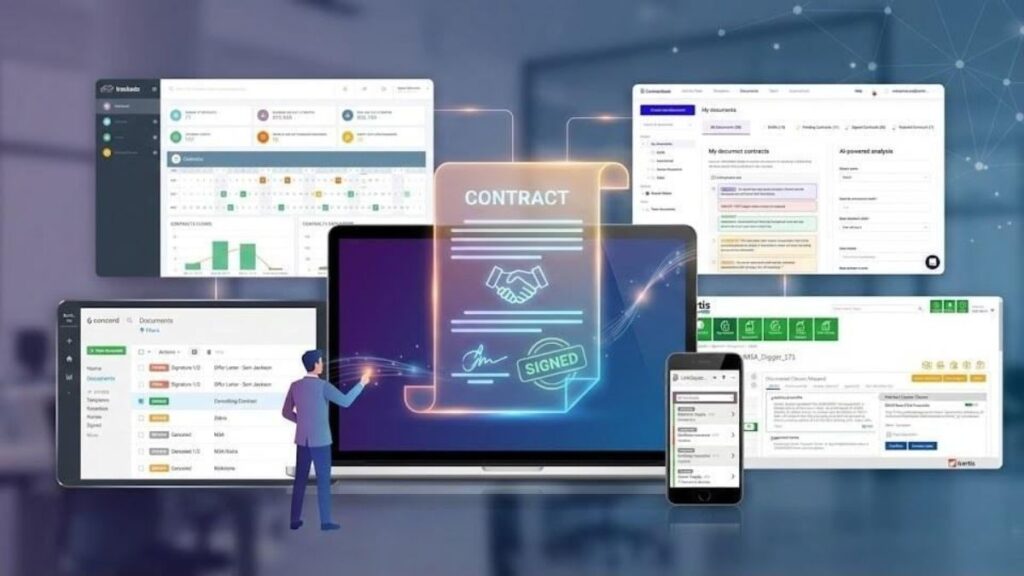
Managing contracts manually can quickly become overwhelming for businesses of any size. From tracking renewal dates to ensuring compliance and maintaining document security, contract administration involves numerous moving parts. This is where contract management software becomes an essential business tool.
Organizations today handle hundreds or even thousands of agreements with vendors, clients, employees, and partners. Without a centralized system, important deadlines can be missed, compliance risks may increase, and productivity often suffers.
Modern contract management solutions simplify the entire process by automating workflows, improving visibility, and helping businesses maintain control over every stage of the contract lifecycle. Whether you’re a small company looking to organize documents or a large enterprise managing complex agreements, understanding how these platforms work can help you make better business decisions.
What Is Contract Management Software?
Contract management software is a digital platform designed to create, store, organize, track, and manage contracts throughout their lifecycle.
Instead of relying on spreadsheets, emails, and paper documents, businesses use a centralized system to handle contract-related activities from creation to renewal or termination.
Core Functions
Most platforms provide:
- Contract creation and templates
- Secure document storage
- Workflow automation
- Electronic approvals
- Renewal tracking
- Compliance monitoring
- Reporting and analytics
- Search and retrieval capabilities
Simple Definition
Featured Snippet Answer:
Contract management software is a digital solution that helps businesses create, organize, track, approve, and manage contracts throughout their entire lifecycle while improving efficiency, compliance, and visibility.
Understanding the Contract Lifecycle
Every contract follows a series of stages. Effective software helps manage each step efficiently.
| Contract Lifecycle Stage | Primary Objective | Common Activities |
|---|---|---|
| Request & Initiation | Define requirements | Stakeholder requests, approvals |
| Drafting | Create contract terms | Templates, clause selection |
| Review & Negotiation | Refine agreement | Legal review, edits |
| Approval | Obtain authorization | Workflow approvals |
| Execution | Sign agreement | Electronic signatures |
| Monitoring | Track performance | Compliance checks |
| Renewal or Termination | Close lifecycle | Renewals, archiving |
Contract Creation
Templates help teams create standardized agreements quickly while reducing legal risks.
Negotiation and Review
Multiple stakeholders can review documents, suggest changes, and maintain version control.
Execution
Electronic signature integration accelerates approval processes and reduces delays.
Ongoing Management
The system tracks obligations, milestones, and important dates automatically.
Key Features Businesses Should Look For
Not all platforms offer the same capabilities. Understanding critical features can help organizations choose the right solution.
Centralized Contract Repository
A centralized database stores all contracts in one secure location.
Benefits include:
- Faster document retrieval
- Improved organization
- Reduced duplication
- Better access control
Automated Workflow Management
Automation eliminates repetitive tasks such as:
- Approval routing
- Renewal reminders
- Notification alerts
- Status updates
Advanced Search Capabilities
Teams should be able to locate contracts using:
- Contract name
- Vendor information
- Keywords
- Expiration dates
- Contract value
Reporting and Analytics
Analytics help organizations gain insights into:
- Contract performance
- Approval bottlenecks
- Renewal opportunities
- Compliance risks
Security and Compliance Controls
Strong security features typically include:
- Role-based permissions
- Audit trails
- Data encryption
- Compliance monitoring
Benefits of Using Contract Management Software
Businesses increasingly adopt contract management systems because of their measurable impact on efficiency and risk reduction.
| Business Benefit | Impact on Organization |
| Faster Processing | Reduces approval delays |
| Improved Compliance | Helps meet regulatory requirements |
| Better Visibility | Centralizes contract information |
| Reduced Risk | Minimizes missed obligations |
| Cost Savings | Reduces administrative workload |
| Stronger Collaboration | Improves communication between teams |
Increased Efficiency
Automation significantly reduces time spent on administrative tasks.
Employees can focus on strategic responsibilities rather than paperwork.
Improved Compliance
Compliance requirements continue to become more complex.
A contract management platform helps ensure obligations are tracked and documented.
Better Risk Management
Missed renewal dates or contractual obligations can create financial and legal risks.
Automated alerts help organizations stay proactive.
Enhanced Collaboration
Legal, procurement, finance, and operations teams can collaborate within a single environment.
Greater Visibility
Decision-makers gain access to accurate, real-time contract information.
How Different Industries Use Contract Management Systems
Healthcare
Healthcare organizations use contracts to manage:
- Supplier agreements
- Service contracts
- Vendor relationships
- Compliance documentation
Manufacturing
Manufacturers rely on contracts for:
- Raw material procurement
- Supplier partnerships
- Distribution agreements
- Service contracts
Financial Services
Financial institutions often manage:
- Client agreements
- Vendor contracts
- Regulatory documentation
- Service-level agreements
Technology Companies
Technology firms commonly use contract platforms to oversee:
- Software licensing
- Partnership agreements
- Customer subscriptions
- Service contracts
Comparing Manual vs Automated Contract Management
| Factor | Manual Process | Automated Software |
| Storage | Multiple locations | Centralized repository |
| Search Speed | Slow | Instant retrieval |
| Compliance Tracking | Manual monitoring | Automated alerts |
| Reporting | Time-consuming | Real-time dashboards |
| Collaboration | Email-based | Integrated workflows |
| Risk Management | Reactive | Proactive |
Organizations transitioning from manual systems often experience significant productivity improvements.
Pros and Cons of Contract Management Software
Pros
- Centralized contract storage
- Faster approvals
- Improved compliance monitoring
- Better visibility across departments
- Reduced administrative workload
- Stronger audit readiness
- Enhanced reporting capabilities
Cons
- Initial implementation costs
- Employee training requirements
- Data migration challenges
- Customization may require additional resources
Despite these considerations, many businesses find that long-term benefits outweigh initial setup efforts.
Common Mistakes Businesses Make
Even the best platform cannot deliver results if implemented incorrectly.
Choosing Software Based Only on Price
Low-cost solutions may lack critical features needed for growth.
Ignoring User Adoption
Employees must understand how to use the platform effectively.
Poor Contract Organization
Without consistent naming conventions and categorization, search functionality becomes less effective.
Failing to Define Workflows
Approval processes should be documented before implementation.
Neglecting Ongoing Maintenance
Regular reviews help keep contract records accurate and current.
Best Practices for Successful Contract Management
Establish Standardized Templates
Standardization improves consistency and reduces drafting errors.
Define Clear Approval Processes
Every contract should follow a documented workflow.
Use Automated Alerts
Renewal reminders help prevent missed opportunities and unexpected renewals.
Conduct Regular Audits
Periodic reviews improve compliance and identify potential risks.
Maintain Strong Security Controls
Protect sensitive information with role-based access and permission settings.
Monitor Key Performance Metrics
Track metrics such as:
- Contract cycle time
- Approval speed
- Renewal rates
- Compliance performance
- Contract value realization
How to Choose the Right Solution
Selecting the best platform depends on business requirements.
Consider the following factors:
Company Size
Small businesses may prioritize affordability and simplicity.
Large enterprises often require advanced automation and governance capabilities.
Integration Requirements
The platform should work seamlessly with existing systems.
Examples include:
- CRM software
- ERP platforms
- Procurement tools
- Document management systems
Scalability
Choose a solution that can support future growth.
Ease of Use
User-friendly interfaces encourage adoption across departments.
Vendor Support
Reliable support helps ensure smooth implementation and ongoing success.
Future Trends in Contract Management
The contract management landscape continues to evolve.
Emerging trends include:
- Greater workflow automation
- Enhanced analytics capabilities
- Improved mobile accessibility
- Stronger compliance monitoring
- Deeper business system integrations
- Advanced contract intelligence features
Organizations that modernize their contract processes are often better positioned to adapt to changing business requirements.
Conclusion
Contracts play a critical role in every organization, yet managing them manually can create inefficiencies, compliance concerns, and unnecessary risks. Contract management software provides a centralized, structured approach that improves visibility, streamlines workflows, and supports better decision-making.
By automating routine tasks, tracking obligations, and enhancing collaboration, businesses can reduce administrative burdens while improving operational performance. Whether you’re managing a handful of agreements or thousands of contracts, investing in the right solution can create long-term value and strengthen business operations.
Frequently Asked Questions
1. What is contract management software used for?
It is used to create, organize, track, approve, store, and monitor contracts throughout their lifecycle.
2. Who needs contract management software?
Businesses of all sizes, legal teams, procurement departments, finance teams, healthcare organizations, and enterprises can benefit from it.
3. What are the main benefits of contract management software?
The primary benefits include improved efficiency, compliance, visibility, risk reduction, and faster approval processes.
4. Can contract management software reduce compliance risks?
Yes. Automated tracking, audit trails, alerts, and reporting help organizations meet contractual and regulatory obligations.
5. How do I choose the best contract management solution?
Evaluate business needs, scalability, integrations, security features, ease of use, reporting capabilities, and vendor support before making a decision.
/ You May Also Read /
WallPostMedia com: Complete Guide to Features, Benefits, Content Strategies, and Digital Growth
Solo ET Explained: The Complete Guide to Building a One-Person Business System